Aquinas and Dante: the Woman Problem


In the medieval world, it was all about hierarchies. When it came to reading scripture, there was an initial literal or historical meaning and then three mystical levels built on top, like the layers of the Mount Purgatory wedding cake.
Those three mystical layers on top were the allegorical (symbolic) meaning, the moral meaning (what we ought to do) and the anagogical (spiritual) meaning, which could get us closer to God. Taken together, these are the Four Senses.
Saint Thomas Aquinas formalized these distinctions in Summa Theologica (written 1265–1274) and more on him in a minute. Dante perhaps had them in mind when he wrote Divine Comedy. This fresco below from 1465 could be read that way.
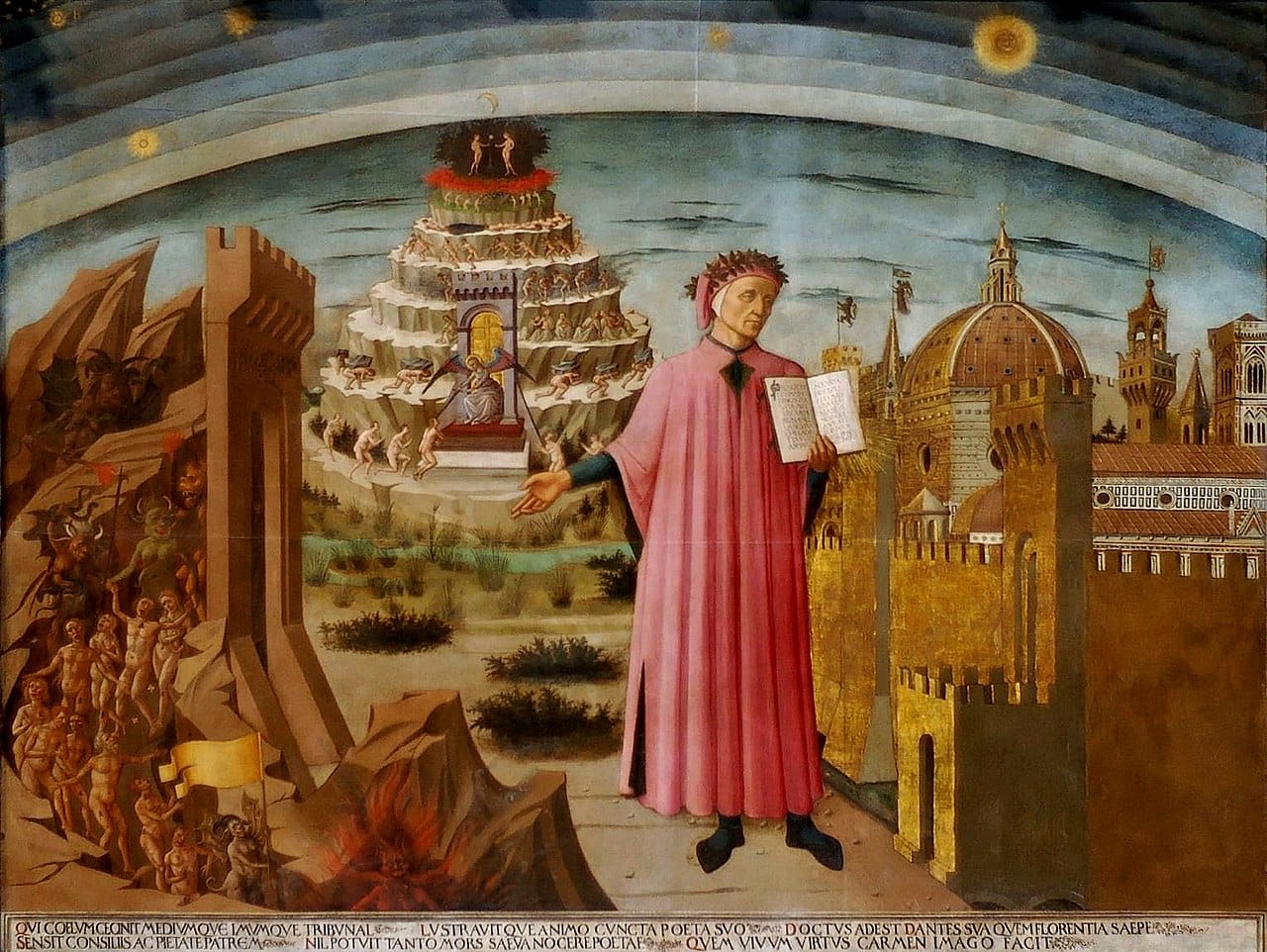
This is Domenico di Michelino's La Commedia Illumina Firenze in the dome of Florence's cathedral. Dante is holding his poem (La Commedia), with sinners on their way to Hell on the left, Purgatory is in the center with Adam and Eve on top, just short of the Heavens, and Florence on the right, which is being illuminated by rays emanating from his poem. The Archangel Michael guards the ascent of Mt. Purgatory, Virgil goes to Hell and, while Dante may get to Heaven eventually, Beatrice never loves him... and Jesus never shows up. It's an oppressive vision, but Dante shared it apparently.
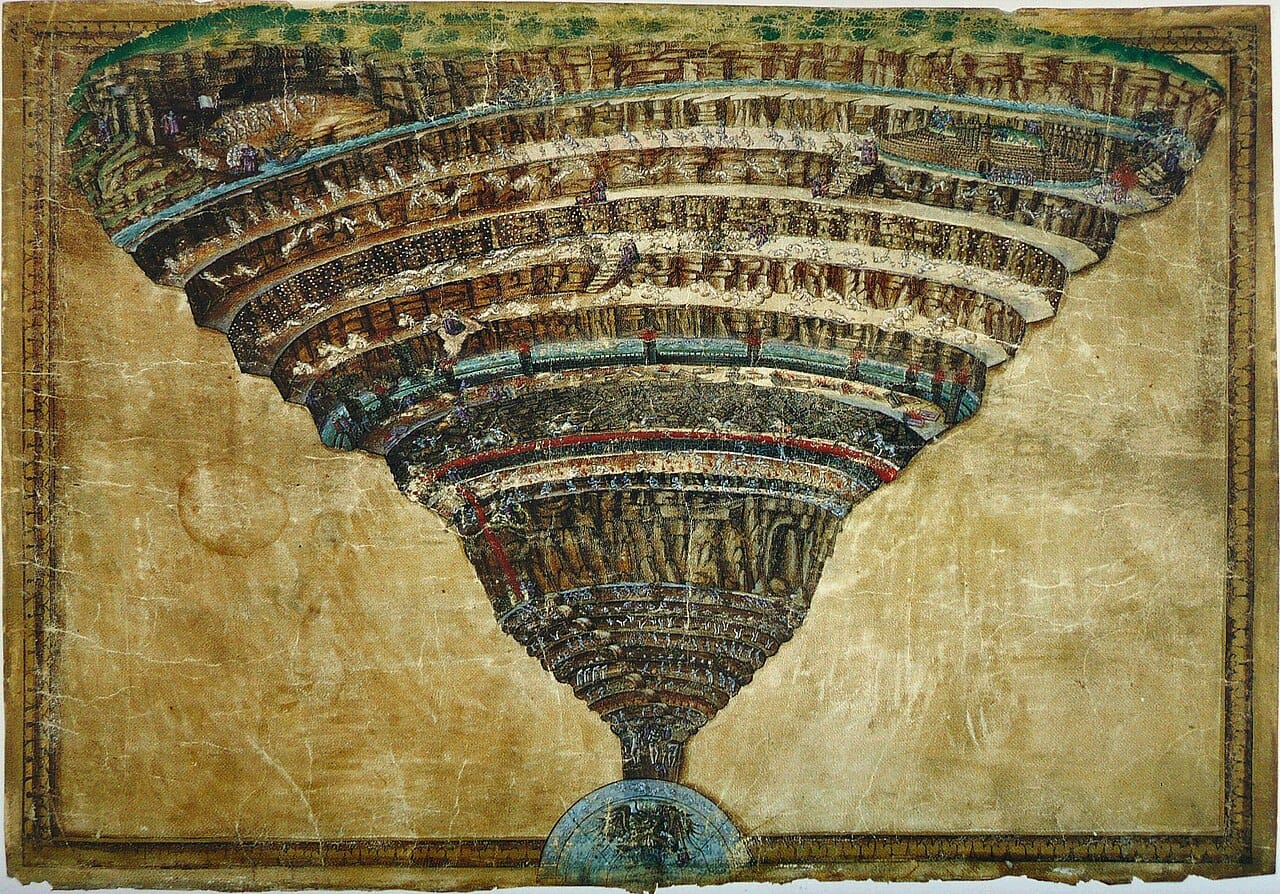
If this was Purgatorio above ground, it found its mirror reflection below ground in the Inferno. This was Botticelli's version in the 1480's:
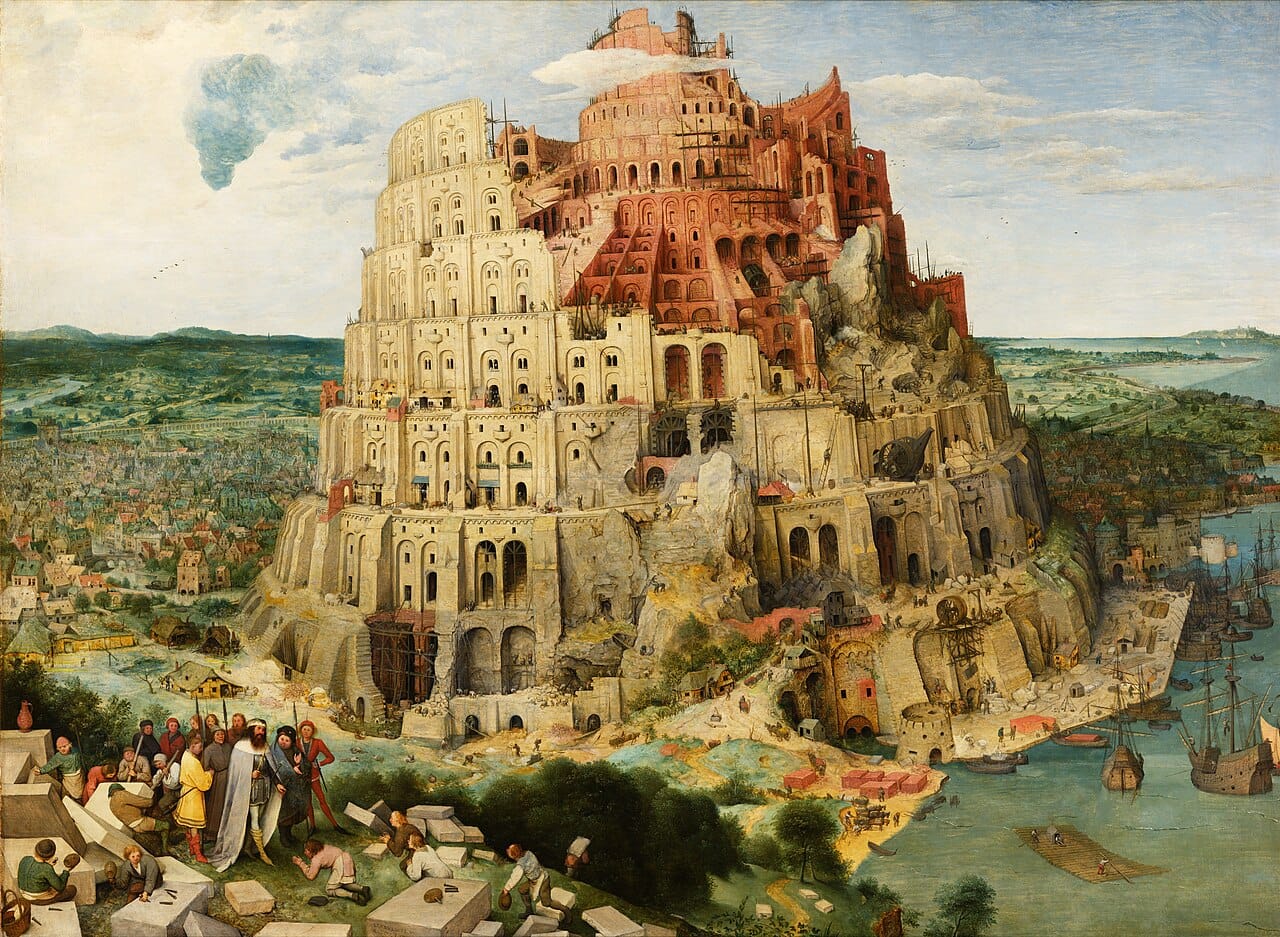
By the 16th century, however, with the Reformation underway, northern European painters were looking for alternative visions and Mt. Purgatory was replaced by the Tower of Babel, which looked strikingly similar to it.
It also resembled the Colosseum in Rome, the home of the Catholic Church. Rome as Babylon, in other words. Consider this famous version - one of several he did - by Pieter Bruegel the Elder from around 1565.
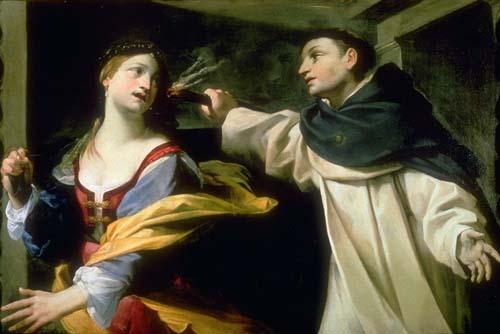
Aquinas, meanwhile, may have been content if no women loved him. When he decided to join the Dominicans, his family were horrified and two of his brothers hired a prostitute to seduce him. She failed - he drove her away with a burning ember, unaware it seems of the unambiguous symbolism. Painters took great interest in this, however. Below is The Temptation of Saint Thomas Aquinas, by Bolognese painter Giovan Francesco Gessi. Velázquez also tackled the subject (shown up top). Both paintings date from the 1630's.
Aquinas is often vilified by feminist writers but it's hard to disagree with them when, typical for his time, he regarded a woman as an incomplete man. Below is just one of many ridiculous quotes from Summa Theologica:
A female is deficient and unintentionally caused. For the active power of the semen always seeks to produce a thing completely like itself, something male. So if a female is produced, this must be because the semen is weak or because the material (provided by the mother) is unsuitable, or because of the action of some external factor such as the winds from the south which make the atmosphere humid.