| Sexual Fables |
|
This article accompanies the fable Splendour in the Grass U.S. public education today = Hamlet? The U.S. public education system today does not resemble Rousseau's Émile. It resembles a Shakespearean melodrama, with stabbings, jealousies, crazy old people and alienated young people locked up together in a Gothic castle. Ah, but which play does that remind you of? It’s not A Midsummer Night’s Dream. Hamlet... Like Hamlet’s father, traditional liberal democratic education is now a ghost. Taxpayer funding for education is in steep decline. But liberals – including most teachers - cling to the vain hope that the State will reverse course and step back into the game. It won’t. The King is dead. This is irreversible but everyone is pretending it isn’t. Education is now in the hands of conservative reformers who, like Claudius, appear as usurpers to liberals. The foundations and think tanks are committed to charter schools, accountability, standardized testing and strict discipline and they are making schools unbearable for students and teachers. Charities are needed to paper over the yawning funding gaps. The exodus of teachers from the profession in the next few years will become a rout. The story of Hamlet, of course, is that Hamlet’s father, the King, is dead and Hamlet refuses to accept it. His uncle, Claudius, has assumed the throne. Worse, Hamlet’s mother is getting cozy with Claudius (there are plenty of people willing to sell out). Hamlet is depressed. His friends are depressed. Ophelia is depressed. Everyone is depressed. Maybe you know how Hamlet ends? Poison and a sword fight where everyone ends up dead, Columbine style.
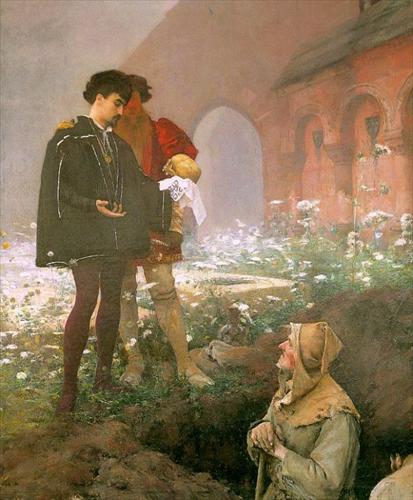
This is Hamlet and the Gravediggers by Pascal Adolphe Jean Dagnan-Bouveret from 1883. In the future, public education has two possible funding models: the military or the entertainment industry. Because the next 20 years will see an acceleration into a more wired and web-connected world, software will be provided to schools by huge for-profit companies. In the past, standardized testing and textbooks were, as often as not, provided by non-profits. This will change. The initiative announced this year by the White House, Digital Promise, is being billed as a public-private collaboration but the taxpayer dollars will still flow out of education (school districts, schools, teachers, parents) and into the pockets of private corporations and rich shareholders. It is a user-pays model and it is what we do with the military, where taxpayer dollars go increasingly to outsourced security contractors, surveillance techniques and high tech companies. The alternative is a pay-to-play model where those same corporations could be asked to contribute millions of dollars into education and in return they could sell advertising in a limited way, with strict regulation. It is how the entertainment industry works. That thought horrifies many educators and parents but apparently they would rather see education follow the military model, because that is where we are headed. Rousseau (and Hamlet) would roll over in their graves. |
|