E.T.A. Hoffmann and The Sandman Letters

Some of us grew up with a vague knowledge of who The Sandman was. He sprinkled sand in our eyes until we fell asleep. But in E.T.A. Hoffmann's short story, The Sandman (Der Sandmann) (1816), he steals the eyes of children who won't go to sleep and takes them to his iron nest on the moon, to feed them to his children. The story appears in a collection titled Die Nachtstücke (The Night Pieces).
Hoffmann sets the scene with three letters through which the narrator brings the past into the present to describe its tortured main character, Nathanael, who fears The Sandman. As with Beethoven's Immortal Beloved, or Edgar Allan Poe for that matter, these letters are a great narrative device and here it receives the full Gothic treatment. Among the other characters, the evil Coppelius and the beautiful Olimpia recall Mary Shelley's Frankenstein (written the same year). Influences include Robert Schumann - Kreisleriana (1838), Delibes' ballet Coppélia (1870), Carlo Collodi 's The Adventures of Pinocchio (1881-83) and Freud's essay, The Uncanny (1919). Here is Nathanael, in a fit of madness, trying to hurl Clara from the church steeple. It doesn't end well.
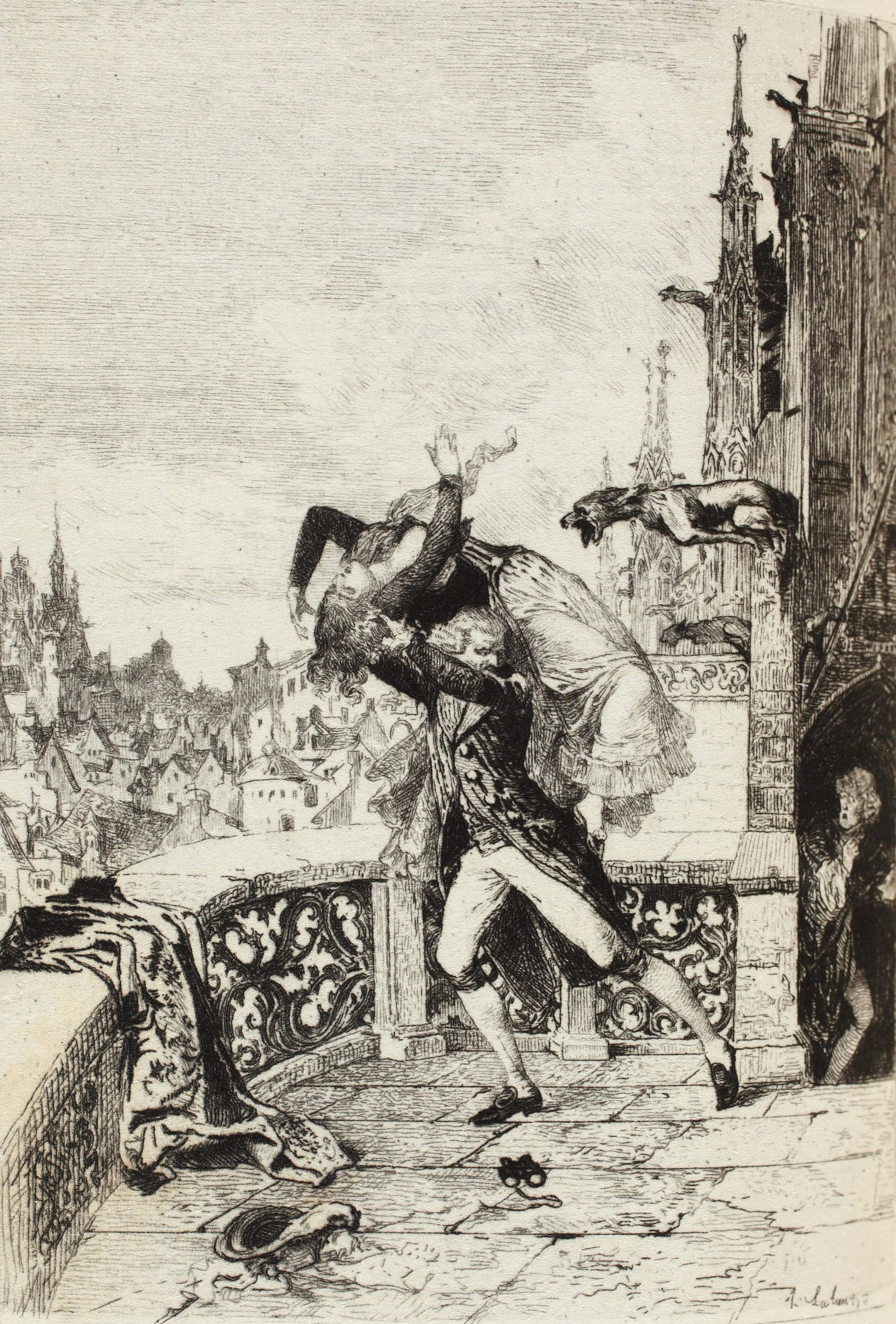
Hoffmann's Sandman is like a creepy adult family friend, about whom we wonder, looking back at childhood, whether he was evil hiding in plain sight or if it was just our own overactive childhood imagination. A Faust-like figure who wore somewhat exotic and colorful clothes. Carl Spitzweg was the master of such paintings.
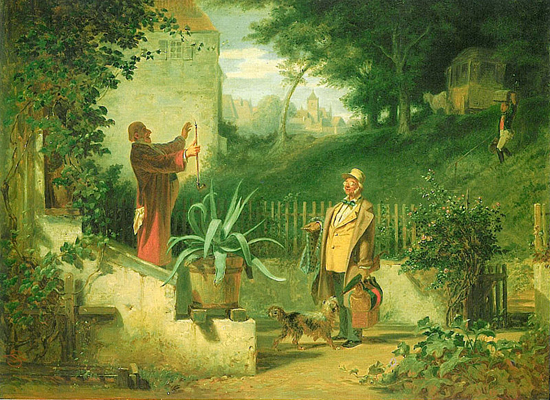
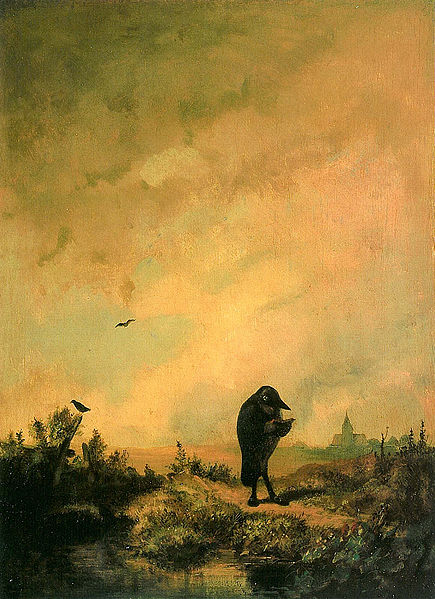
This is from 1855: Die Jugendfreunde (The Childhood Friend) but Spitsweg could go darker. Here is Der Rabe (The Raven) from 1840.
Also see The Nutcracker and Morpheus and for more Carl Spitzweg and Biedermeier, here.